MILESTONE: Twentycoreseven’s 6 month anniversary
Well, we reached our first milestone. In such a short span of time, we’ve grown to a team of 20 awesome individuals, pissed off a record label, delivered 28 release reviews, reviewed and photographed 11 bands at live events, and interviewed 5 of the most captivating people in the alternative scene. That’s quite the list of accomplishments for a publication that’s only in its first year. To commemorate our 6 month anniversary, some of the team at TC7 have decided to shine light on some of our favourite albums of all time, to give you an insight into what sits at the core of our love for music.
Everyone say “Happy 6 months, Twentycoreseven!” right now.
HAYLS
TOO CLOSE TO TOUCH - HAVEN’T BEEN MYSELF (2016) [Epitaph Records]
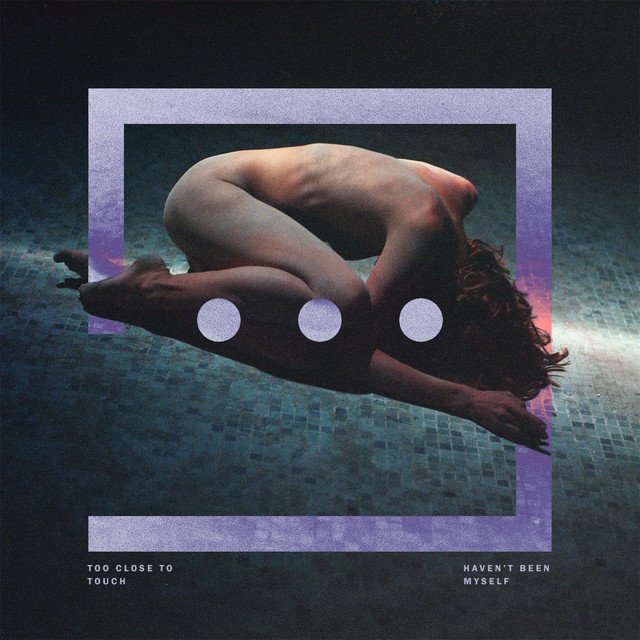
There’s not many bands that can instil the gut-wrenching feeling of grief onto someone who’s not experiencing or has experienced it, but Too Close To Touch spared no soul with their sophomore album, “Haven’t Been Myself.” Opening and closing your album with 2 tracks that rip the listener apart from the inside and leave them as nothing but a shell of who they once were before hearing it, is a guaranteed way to etch yourself into the hearts of fans forever. 10 years on, and this album still wears its medal as one of the first records a lot of people think of when asked, “What album catatonically crushes you?”
Deeply pained lyrics aren’t something Too Close To Touch ever shied away from, and this is no different. With the foundation of the album centering largely around the passing of late Keaton Pierce’s 3 year old sister, Eiley, we’re thrown head first into the domineering parts of his mind and how he experienced that loss. Across all 11 tracks, the stages of grief and heartbreak are told through strained and desperate vocals, gloomy, ambient post-hardcore riffs, and melodies that could’ve come from angels themselves.
Where there isn’t a considerable technicality to the instruments, Keaton’s vocals carry the weight throughout and unapologetically portray themes of survivors guilt, betrayal, despondence, and anger, in a form that sinks into the deepest parts of your chest cavity. His talent for expressing emotions that others struggled to find comprehensible words for, was extraordinary, and harrowingly crushing at the same time. Lyrics such as, “Don’t you dare say I’m gonna make it, cause I don’t believe a word you say,” from Sympathy, and “Take every memory ingrained in me, erase them from my thoughts so I can sleep.” from What I Wish I Could Forget, delivered with the level of anguish he was able to project, was something that made this band so special to so many people.
Despite the entire record being poignant and laced with hurt, the most notable lyrics are from closing track, Eiley. There’s nothing on this Earth that can prepare even the coldest person for the lines, “She was mine, she was mine. What did we do to make you take her from our lives? She was mine, she was mine. Oh God, oh, what did we do?” What makes that entire verse much more powerful, is knowing that Keaton did one take of it, screaming through tears, and wanted to retake but was advised not to, thus we were left with the tragic rendition of his pain in real time. Putting your true and uncloaked emotions onto an album and releasing it for all to hear is commendable, as many would skirt around being so vulnerable, but the payoff is a lasting effect that still painfully lingers after a decade.
One thing is for certain, “Haven’t Been Myself” is relatable to all who listen, whether directly or indirectly, and it’ll have you involuntarily curling up into the foetal position and sobbing uncontrollably, tearing you apart until you have nothing left to give.
OCEANA - BIRTH.EATER (2009) [Rise Records]
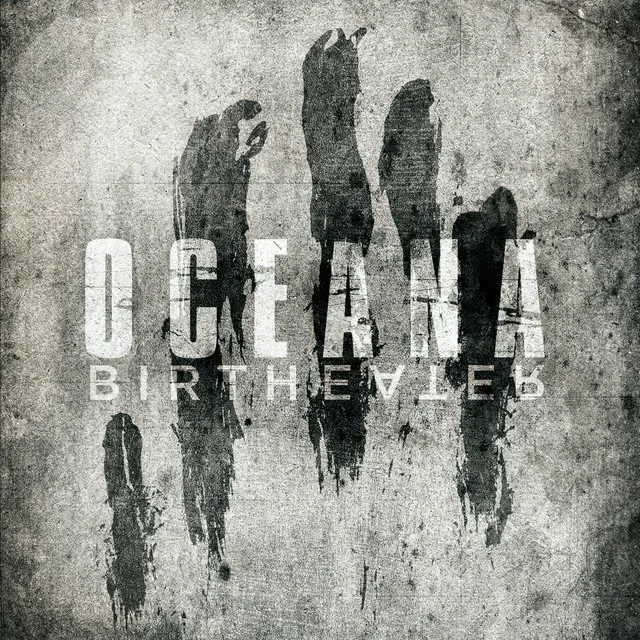
Oceana’s sophomore conceptual album, “Birth.Eater” describes a semi-autobiographical rendition of a child who survived termination by their parents, and is ultimately left to process the fact of life, while being aware they were unwanted. Its lyrical duality fights with the anguish towards their Mother and Father, as well as processing their survival into existence, portrayed via vocalist, Brennan Taulbee through lyrics such as, “Something didn’t want you to live in me, my body rejected you, you don’t belong to me.” from Dead Speaker, and “I am forever alive, I hook my heart to my eyes. I raised from birth just to die, I keep the devil inside, I grow him in me.” from The Family Disease. Throughout this record, it’s apparent that the turmoil bled from surviving termination, breathing into a life you were never supposed to live, carries a darkness inside an individual that is challenging to navigate, and Oceana impenitently expressed those burdens in a cathartic post-hardcore record.
Assisting the record’s topics of dismay, rejection, and conflict, are gritty, full riffs that accompany the emotions in musical language. They trace around the lyrics and provide the indiscernible outlook required to push the album and everything it stands for into the faces of those who need to hear it.
For something that was created 15 years ago, the quality of sound and production evident is admirable, and is something that allows it to hold up as a masterpiece that’s still remarkable to this day. Having such a clean mix allows listeners to hear every ounce of disturbance that was poured into its formation, and for a concept album such as this, it may have faltered without it. You’d also be surprised to find out its year of release, that’s how pristine (in the right places) it truly is. The craftsmanship, phrasing, and compilation is grounds for what others could only ever dream of executing in the modern age of post-hardcore.
“Birth.Eater” marked the beginning of the end of Oceana, and they couldn’t have transitioned to close their short reign as a band with a more formidable penultimate record. When you take the time to understand it at its core, and immerse yourself in the environment presented before you, you’re faced with the unfortunate realisation that they just don’t make shit this good anymore. No one wants to tackle some of the harshest truths of human existence, or metaphorically bleed onto the listener through their art with closing lyrics such as, “All of our Sons and our Daughters are dead, and the birth that we stole. Eater grows old.” But Oceana did, and they did it so unrepentantly that it made “Birth.Eater” a long lasting magnum opus.
TIMI
PARKWAY DRIVE - KILLING WITH A SMILE (2005) [Epitaph Records]
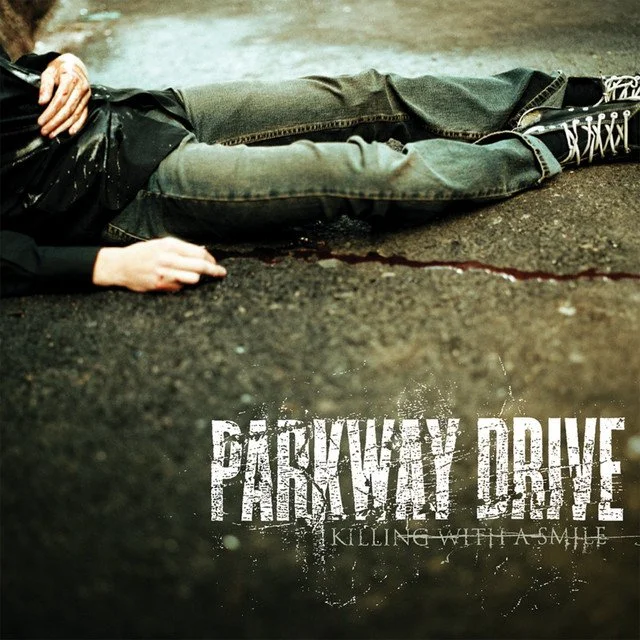
When you think of memorable riffs and early 2000s metalcore, your mind will probably go to Parkway Drive. Dominating the 2000s with their song Romance Is Dead specifically, the instantly recognisable opening riff immediately perks up your ears and the infamous breakdown that immediately wants you banging your head. It’s almost contagious! The best thing about Killing With A Smile is that every song is filled with the same amount of energy and is an exciting and enjoyable listen throughout. Clean vocals? Non-existent. Cheesy guitar solos? all in. Produced by Adam Dutkiewicz (from Killswitch Engage) you can definitely tell that they were in good hands from the get go.
The opening track Gimme A D is memorable and the best way to open a record, with a raw sounding melodic riff and nods towards bands such as Unearth, in which the band had blatant inspiration. While reminiscing about incredible tracks that came from this record, Guns For Show, Knives For A Pro goes down as one of THE best breakdowns of all time. The line sometimes becomes blurry between hardcore vocals and metalcore, so some of the lyrics can be a bit lost, but the breakdowns in this song completely take you out of the overthinking. Parkway Drive are big fans of the song-ending fake-outs and this was a cherry on top.
Smoke ‘Em If You Got ‘Em is the second to last song on the record and it really jolts you awake the second it starts, with chaotic and quick paced rhythm throughout and the high energy maintained throughout. It itches your brain in ways you wouldn’t think, with many notable moments that will catch you playing air guitar.
When this record came out it seemed to be more of a nod towards the hardcore kids, which you can easily tell by some of the riffs and even now, this sound seems hard to replicate to the extent that they achieved. By releasing this record, they had single-handedly created a popular ‘hardcore kids creating metalcore’ trend, in which we have all come to love nowadays.
Parkway Drive suffered from their own success by giving us such an incredible debut album it felt like they really gave their all, because everything after this seemed to be genuinely underwhelming, and yet you can tell that even now they have small nods towards their 2005 selves.
Considering this was a debut album, it has single-handedly changed the direction for metalcore. You will always find yourself returning to this, no matter what. If you like hardcore breakdowns, guitar slides and cheesy riffs then please listen to Killing With A Smile.
CITIZEN - YOUTH (2013) [Run For Cover Records]
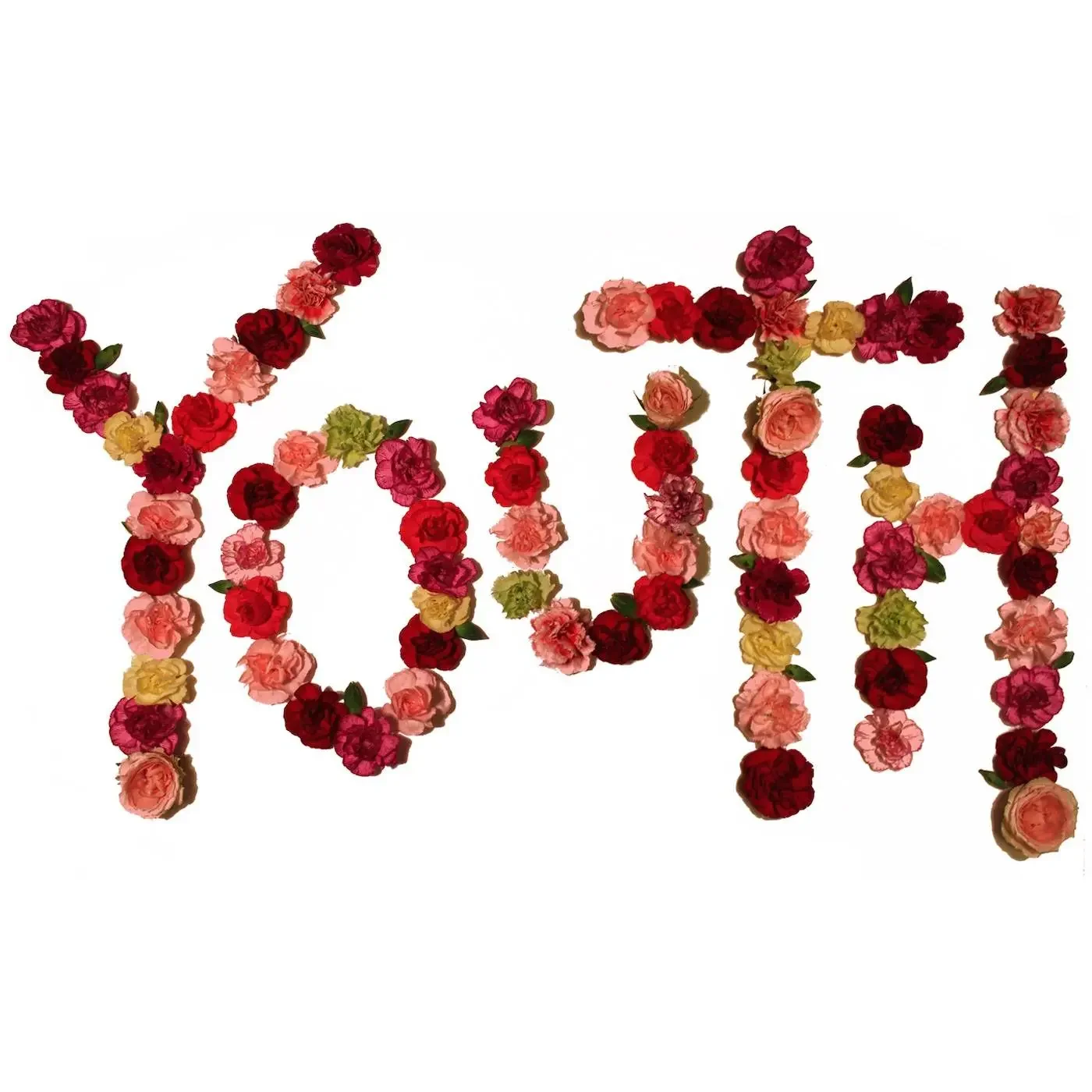
When you think of Citizen, you think of gut wrenching songs about heartbreak and the feelings of teenage angst. “Youth” is the incredible debut album from Citizen, released in 2013. When the world was experiencing bands like Title Fight & Balance and Composure and wanting more hardcore leaning alternative music.
“Youth” is a monumental album, leaving a memorable mark on anybody who listened, even if you aren’t a Citizen fan you most definitely have recollection of seeing the famous album artwork everywhere in heavy alternative online spaces. It left a mark on anybody who listened and has universally become one of the greatest ‘sad post-hardcore’ albums ever made.
The album opens up with Roam the Room which throws you into fast paced and energetic energy within the opening seconds, Mat Kerekes’ talent shows he can seamlessly change his vocal range from hardcore vocal fry screams to hearing the raw emotion in his clean singing vocals, Roam the Room is an incredible album starter that sets the tone to the rest of the record.
The Summer is the third song on the record, with the opening lyrics “I watched you burn, and I felt it” becoming a staple in the 2013 tumblr bio community. With the slow and steady intro quickly throwing you into the real pace of the song, easily becoming one of the most iconic singalong songs. The Summer was the only single off this album and was a lot of people’s introduction to the band, encompassing the band's sound into a single song. It is the best representation of the band sonically at that point.
Now, close your eyes, lay in your bed and picture yourself aged 16. Experiencing your first real heartbreak in a room surrounded with posters, records and flyers. You throw on your sad playlist, ready to cry your heart out. Chances are, Sleep is on that playlist. The song is slow and steady throughout while the chorus is impactful, being the only heavier lyrics, with Mat screaming “Do you sleep anymore?”, the ending of the song becomes a soundscape that creates a beautiful transition into the next song, How Does It Feel?
While you’re crying, you hear the song The Night I Drove Alone which is arguably the heaviest hitting song on the album, becoming Citizen’s magnum opus. Everybody has some sort of memory attached to this song, whether nostalgic, emotional or even just curiosity. Pure emotion went into this track, and you can tell. This quickly became the break up song of the summer when this was released, and still holds heavy to this day.
13 years later, this album still remains one of the most iconic emo albums to come out in the last few decades and almost serves as a gateway album. It still has the community in a tight chokehold which is evident in their live performances, whenever they play any songs off this record live the audience reactions are something to behold. Youth is quite often held to such a high regard and placed on a high pedestal which is deserving for a band's debut. Arguably, this album hasn’t been topped by them or anybody else. Youth is an extremely special album and is almost impossible to replicate.
ED
ALTAR OF PLAGUES - MAMMAL (2011) [Candlelight Records (Europe)/Profound Lore Records (US)]
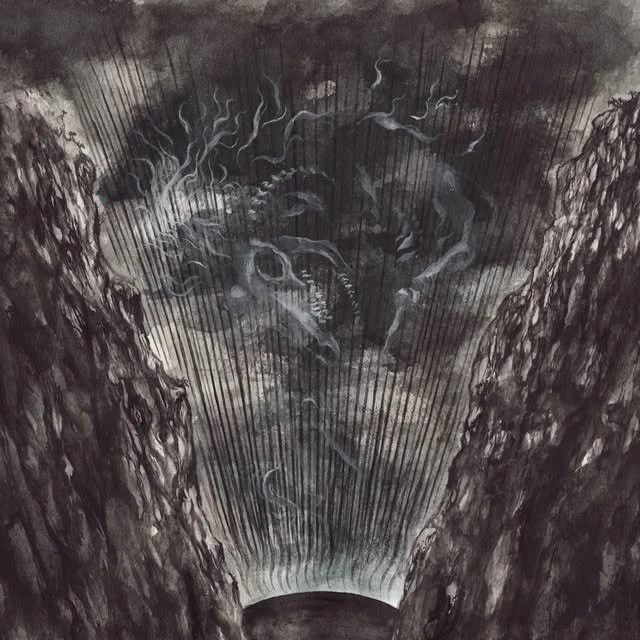
“Birds know nothing of this; it is our vanity. We create this death; we create this entity. We have created death. Neptune is dead.”
Altar of Plagues was a band that pushed boundaries. Hailing from Cork in the Republic of Ireland, they took a sound that can often fall victim to myriad genre tropes, pushed it to its physical limit, and then disbanded. Three perfect albums, a few EPs, and a spattering of lower profile releases. With their 2011 sophomore full length, Mammal, they created a black metal record that nobody has been able to replicate. A truly unique record, it is as desolate as it is demanding. An album about death and the futility of the human condition, it makes you fight for every second.
Beginning with a song as long as Neptune Is Dead is a conscious decision. To craft a song as intricate as this takes a tact and precision that very few will ever match. A true labour of love, or perhaps in this case something more akin to self-harm, it is one of the best opening songs you will ever witness. A crescendo so good you will think to yourself, “Where can they go from here?” before they best it in the same song with another. Eighteen minutes of sorrow. Track one. Fuck you.
Arvo Pärt, the Estonian composer, was a big influence on this record. Working with minimalist composition is no easy feat, and the band’s primary songwriter and one of two vocalists, James Ó Ceallaigh, took large inspiration from his work during the composition of this record. Everything has a purpose; every note, moment of silence, fragment of ambient noise, exactly where it should be. An album painstakingly crafted to within an inch of its life. An inch of its death. A true example of deliberate action within music, and one of the greatest examples of expression to be found within a genre that is so often maligned.
Track four, All Life Converges to Some Centre, is one of the very few pieces of music that has made this writer shed genuine tears. Whilst the composition begins to amplify into yet another desperate and gasping crescendo, James cries out: “Who will conduct the ending scene, now that my love is extinct? Once we have reached the silence, the making of my soul will be extinct. Slowly lead to a home far from home with no space between”. The pain in this impassioned vocal, combined with the masterful composition that surrounds it, hits harder and harder every single time. A true masterpiece.
The experience this album provides is one of a kind. Nothing about this record is easy. It demands your attention and fights against you at every step. This is not fun. Nothing about this record makes you want to listen to it, but the satisfaction of overcoming the obstacle laid before you and persevering through to the album’s final end is enormous. A catharsis that can only be realised by sitting and giving this your true and undivided attention. Put your headphones on, sit down, and shut up. Listen to it. It’s the best album ever written and you owe it to yourself to hear it, even just once. When the doors to the mausoleum close and the record comes to its solemn conclusion, rest easy. When the sun drowns in the ocean, all life converges to some centre.
THE CURE - DISINTEGRATION (1989) [Fiction Records]
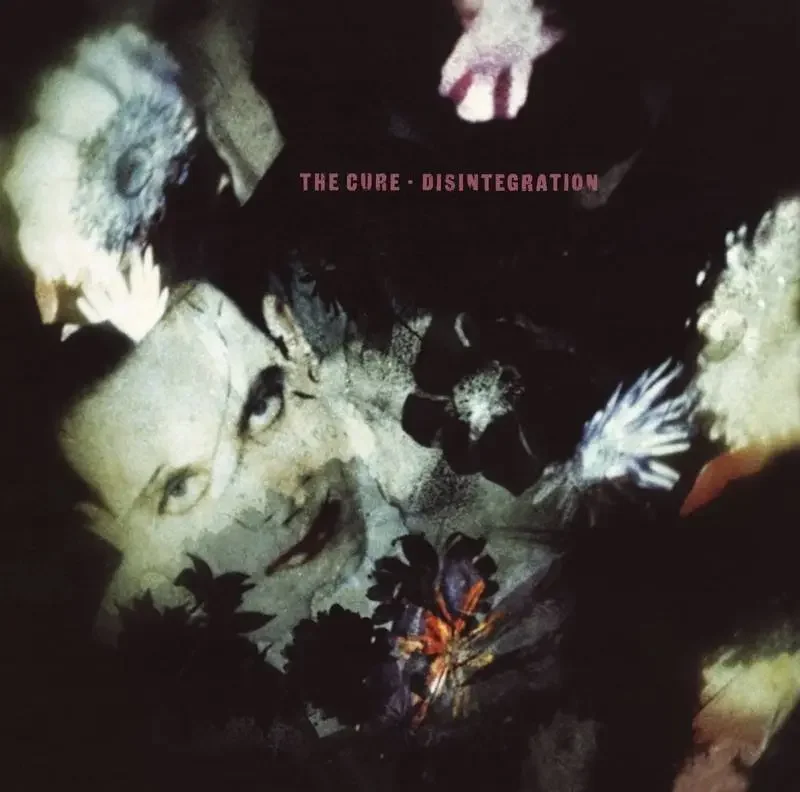
The word ‘classic’ is thrown around incredibly liberally in this day and age. Sometimes deservedly, other times as an act of excitement, or perhaps an attempt to elevate a personal favourite to a height otherwise unwarranted. The Cure’s 1989 album, “Disintegration”, is a perfect example of a record so undeniably brilliant that you have no choice but to question why anyone would not have heard it, why anyone would not love it. It is a classic in the purest sense of the word, a generation-defining record that has stood the test of time and touched the lives of so many, influencing artists across the world and across mediums to a near incomprehensible degree.
The Sussex goths had already been chipping away for well over a decade by the time this record was released, and were by no means an insignificant band. Discomfort at the band’s increased popularity had led Robert Smith to lapse into psychedelic drug use, the effects of which are at times startlingly obvious but always beautifully harnessed within the musicianship. It is immensely hard to imagine how talented you must be to craft songs like Closedown and Prayers for Rain while off your head on trippers, but somehow Smith managed it and cemented himself as a bandleader for the ages.
Simon Gallup’s bass playing frequently serves as a foil to the deep sense of melancholy that Smith brings across, and this, combined with Roger O’Donnell’s masterful approach to the keyboard, hooks the listener. There is so much to find within these songs, and so much of what makes them as iconic as they are lies within the fingers of these two men. This record would be a shell of itself without O’Donnell’s input. A song like Lullaby is almost defined by its keyboard element. His performance serves the album without ego, complementing everything he touches, and as the guitars intertwine to create what is at times an overwhelming sense of foreboding, his shimmering presence adds character and some of the record’s most legendary moments.
The hard-hitting approach to the drums only amplifies the sadness. Mechanical, forceful, deliberate. Devoid of humanity whilst conveying the bleak reality in which the band was living. But this isn’t always the case. At times they can feel almost gleeful, chopping and changing as the orchestration calls for it. On Lovesong, he skips along in the background and uplifts the lover’s lament.
It is as much a dictionary definition of a headphones album as any you will hear. It transforms itself when you allow the layers to wash over you and fully encompass your senses. Repeat listens only add to the experience, each replay unveiling more and more. Listen closely, for there is so much to discover beneath the surface. Listening to it in the dark is almost essential; to do so in the light of day almost feels wrong. It comes alive in the dead of night, the soundscapes reflecting the glow of the moon.
With “Disintegration”, Robert Smith and co are repeatedly fighting back against their pop-loving audience. It was an act of sonic rebellion that attempted to shift the tide away from the masses and instead pushed the band further into the mainstream. They created their magnum opus, and they defined themselves. This is them at the peak of their powers, and together they defied the barriers put before them, heavy substance abuse and massive internal conflicts to name just two, and created a timeless, genre defining record.
REECE
LOATHE - I LET IT IN AND IT TOOK EVERYTHING (2020) [Sumerian Records]
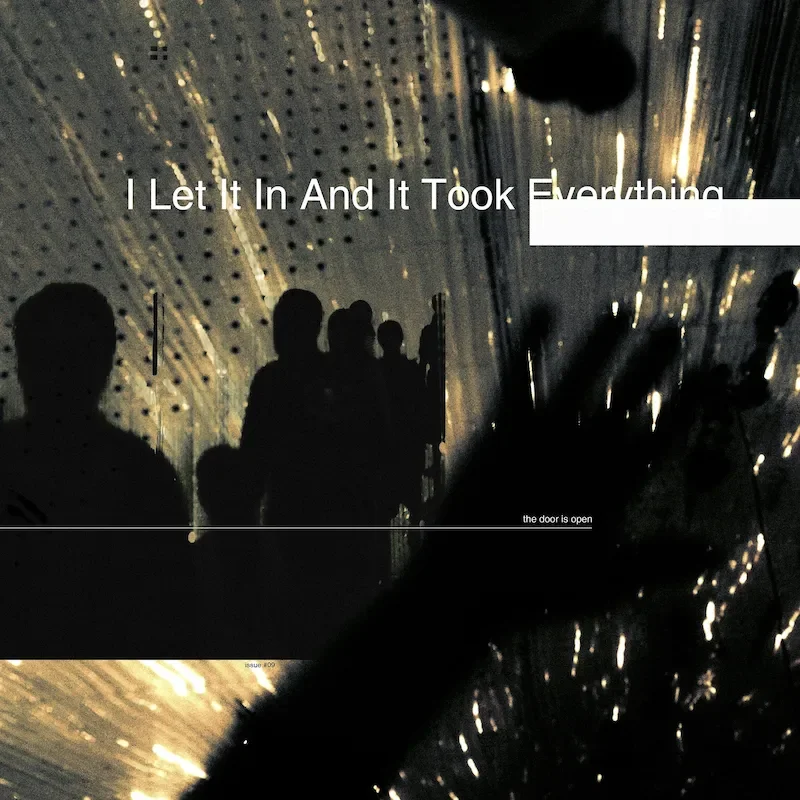
6 years on, Liverpool based band, Loathe’s album “I Let It In And It Took Everything” is still held in high regard by the entire scene and with a few days from the band's next record, it’s time to look back at their statement piece and why it is so beloved by many.
After a short interlude to start the album we enter Aggressive Evolution which immediately sets the tone with grit and growling from vocalist Kadeem France with his use of poetic metaphors until we reach the chorus with guitarist and secondary vocalist Erik Bickerstaffe with a calmer tone and grace showing us the two ends of the spectrum of this band, anger and frustration which turns into acceptance when the vocalists swap.
Two Way Mirror was a new direction for the band at the time when it was dropped, ditching the metalcore riffs for a shoegaze track that was make or break for them and it was perfect, this song makes you feel each lyric like it’s spoken directly to you. A track about losing someone (or something) and searching for acceptance within yourself. with a similar structure to Aggressive Evolution before, we have Kadeem on the verse and Erik singing the chorus which you see often within this record.
Fan favourite Screaming is up next, starting off showing Kadeem's clean and thoughtful style with a track about isolation, loneliness and the act of screaming into an empty space but quickly turns into hatred, aggression and fear. This record really captures the idea of isolation and pain and the internal thoughts that go alongside it and this is just the track for it whilst still making you want to dance around your room with the guitar.
Immediately after we have Is It Really You? This is the most popular track off the album for a reason, perfection in every part you listen to, the instruments combine like a symphony and the vocals make you feel something you’ve never felt before. The track seems to showcase dissociation and not recognising a person from the past. This emotional piece was many people’s introduction to Loathe, especially after covers by bands Sleep Token and Teenage Wrist. Experiencing this song live is something that should be on everyone’s bucket list as the pits turn into everyone belting out all their emotions at the band in a beautiful showcase.
We are then thrown into Gored, which flips the script, gone are the soft sounds and we are now placed into a song full of down tuned riffs and blast beats making your body move involuntarily (in the best way possible) an intense non stop track which showcases all of Loathe’s best heavy aspects compacted into 3 incredible minutes. (This may be one of the best songs of all time) Hearing this song for the first time is the equivalent to being slapped in the face and taken to heaven at the same time.
For all the tracks that were not spoken about in this album, they are still incredible and worth your time, this is one of the best crafted albums of all time, mixed and mastered perfectly with nothing overlooked. Loathe cemented themselves with the greats after releasing this record and after member Connor Sweeney left the band, with his contributions towards this album being very large, many wonder how their upcoming album will be received. Live Laugh Fucking Loathe.
CALLUM
JIMMY EAT WORLD - CLARITY (1999) [Capitol Records]
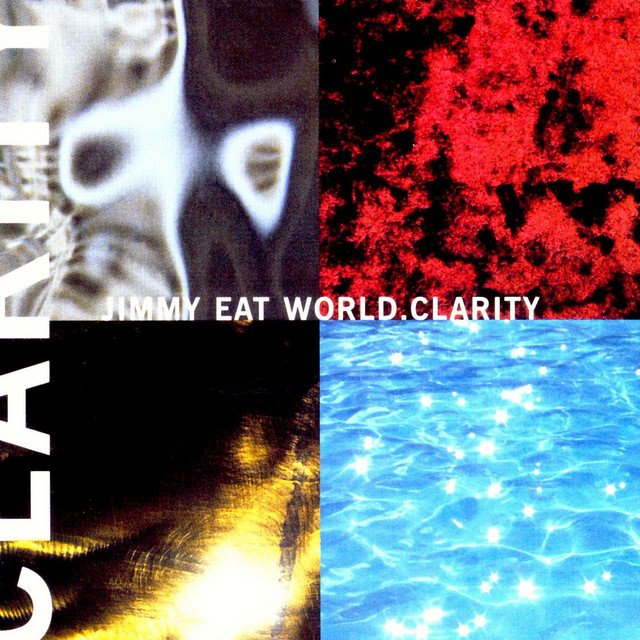
It’s hard to explain the impact of a record that for all intents and purposes was dead on arrival, with a label that had forgotten about them in favour of cashing in on nostalgia, and the zeitgeist
favouring pop-groups, this introspective yet sprawling landmark of the 90s emo movement has been able to stand the test of time. Jimmy Eat World didn’t become a global sensation off the back of “Clarity”, it was too squeaky clean for the underground where they honed their skills, and it was too experimental for the mainstream rock crowds, it’s a feat that it is able to stand on its own as a record that people seek out when looking to dive further into the world of emo.
Musically this album is vast, “Static Prevails” was Jimmy Eat World’s first foray into emo and their first on a major label, it’s an album that you can see across the tracklist a band finding their feet and even as clearly as trying to figure out who should be the primary vocalist. It’s a great record and it sets up what would be expanded on next. “Clarity” however, is otherworldly. Simply put, it finds the band pushing themselves entirely and exploring every possible musical avenue without ever feeling disjointed, they felt this was their last chance to create an album on a major label budget and made sure they wouldn’t walk away with any regrets.
Opening the album, Tables for Glasses immediately sets this record apart, a slowcore epic akin to legends of the genre, Low,or even their contemporaries at the time, Mineral, they created a song that is equal parts a flex of how much they have grown as musicians but also a showcase in restraint, there is so much space between everything, in particular Zach Lind’s drumming, which throughout the record is some of the most inventive you’ll hear. The interweaving vocal melodies courtesy of Jim Adkin’s drift over the instrumental in a dreamlike trance until the conclusion of the song which soars with the words “Lead my skeptic sight”, which can be interpreted in a literal sense of, trying to understand the actions of the person being watched, but with “Clarity” there is a recurring theme of the breakdown of a relationship, and coming to terms with it. This lyric suggests to this writer a wish to see a way for things to work out, trying to avoid the pain that comes with ending things.
There are more energetic songs throughout the record that you would come to expect from Jimmy Eat World, Your New Aesthetic features a dissonant chord progression followed by vocals with much more of a bite, the track is a commentary on how homogenised the music pushed by mainstream radio was at the time, whereas Blister is a rare moment where original lead vocalist Tim Linton takes the reigns. There’s more of a grit to his vocals and it really adds a lot to a song about being let down and taken for granted by someone you cared for.
In an album with several all time emo lines, perhaps one that is the most effective is found in For Me This is Heaven, a stunning existential piece that explores trying to be more present and accepting why things must end, “If I don’t let myself be happy now, then when?” it’s such a straightforward line but it’s one when you’re feeling low that you need to hear, it’s a refreshingly mature take from an album chock full of them. Although what came after would make them a chart topping success, “Clarity” made them legendary.
WARNING - WATCHING FROM A DISTANCE (2006) [Relapse Records]
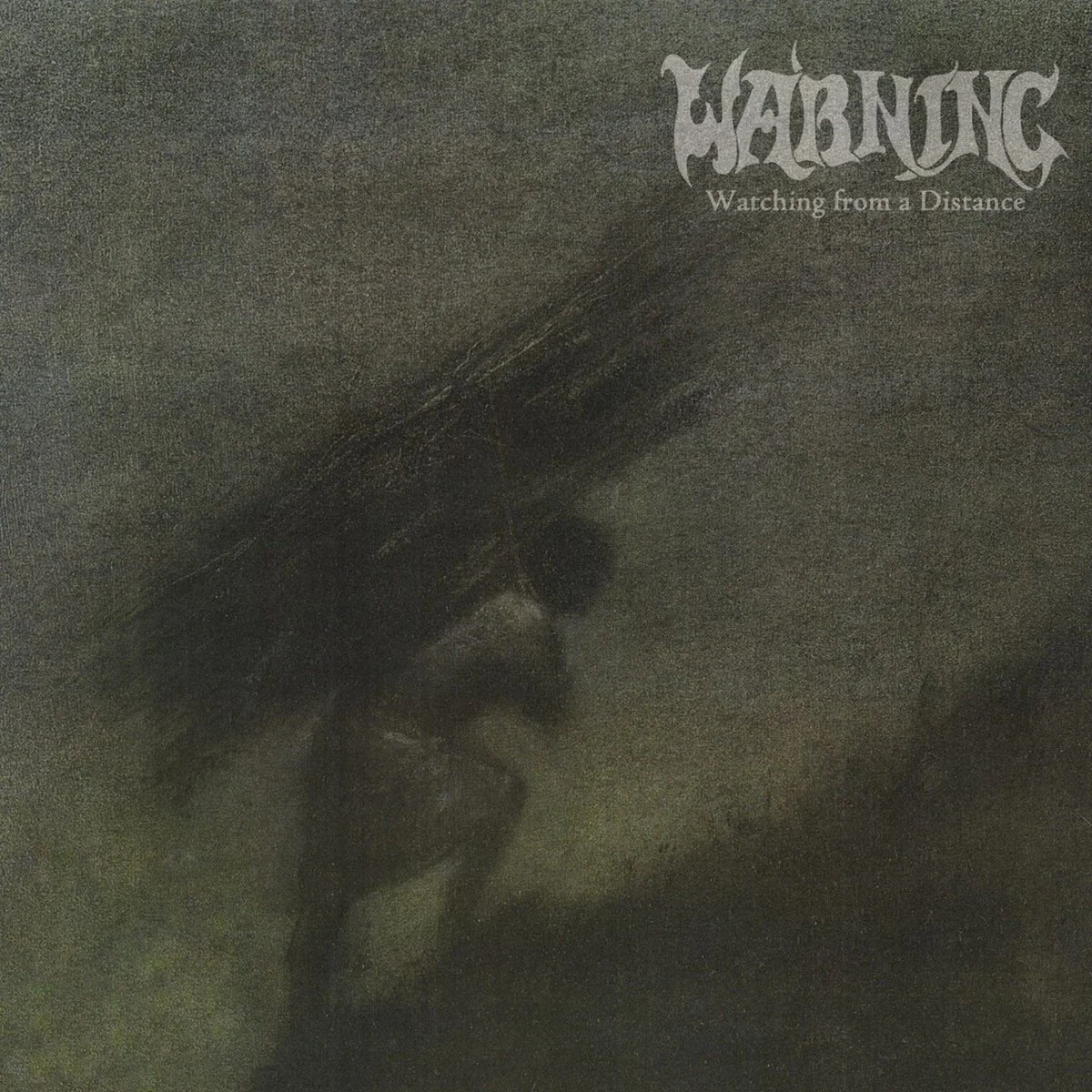
In metal music, the conversation always seems to revolve around what is heavy and who is the heaviest band. There is an obsession with finding who can tune their guitar lowest, and who can record the most abrasive wall of sound. A lot of that can come off as performative, the riffs are only as heavy as the writing and, in Warning’s case, “Watching From A Distance” is one of the most gut-wrenching and heavy records ever made. This is an album that pummels you with the pain and anguish of the subject, to the point where it’s overwhelming. It’s not something you can easily throw on, but it’s an absurdly rewarding listen if it finds you at the right time.
Across the record, the lyrics discuss feelings of loss, whether that be the loss of a relationship or the loss of someone who passed. The core of this album is what comes after: the isolation, the yearning, and the struggle to pick yourself up and move on. The opening title track, Watching From A Distance, looks at the feelings after a breakup, a longing for the love felt at the start, yet at the same time an acceptance that it’s over and all you can do is watch on and hope they can remember what you once shared as well.
Musically, this hinges on two key things: first, the atmosphere built by the instrumentation, slow-paced guitar accompanied by a rhythm section that bolsters the lead melody and, in terms of the drumming, is equal parts thunderous and incredibly controlled. There are no needless frills to the playing, but the sound is absolutely massive. Secondly, the soaring vocals by Patrick Walker are so powerful and moving, he is completely pouring his heart out with the words and his delivery is intense and, at points pleading, there are theatrical elements but it never feels inauthentic, the performance is coming deep from the soul. Both of these come together to give the album such a cold and isolating atmosphere, it evokes the image of a lone traveller reminiscing with pain and regret, but trudging on as they must.
The second track, Footprints, features perhaps the most well known moment from Warning. It’s a much darker song, the guitar melody changes the mood immediately and offers some dissonant chords that ring out with such a sting. The song is perhaps the most vulnerable on the record and opens with a dejected feeling. The line to close this first verse, “You are not a foundation, you are not a stone,” feels like the subject admitting defeat, whatever hope or idea they had that their partner could save them from themselves, was flawed. As the song progresses, it features perhaps the closest thing that could be considered a solo. It offers a moment to sit and process what has come before. A modulation then kicks off the final verse, adding a dynamic shift. The song is built on reaching this moment with the roaring “Here I am wide open, surrendering to your side.” The protagonist is bearing all in the hopes they can be built back up again.
Twenty years on, there are only a few records that can compare to the unbridled emotion contained within “Watching From A Distance”. It’s perhaps quite fitting that one of the closest is their long-awaited follow-up, “Rituals Of Shame.”
RAIHAN
MY CHEMICAL ROMANCE - I BROUGHT YOU MY BULLETS, YOU BROUGHT ME YOUR LOVE (2002) [Eyeball Records]
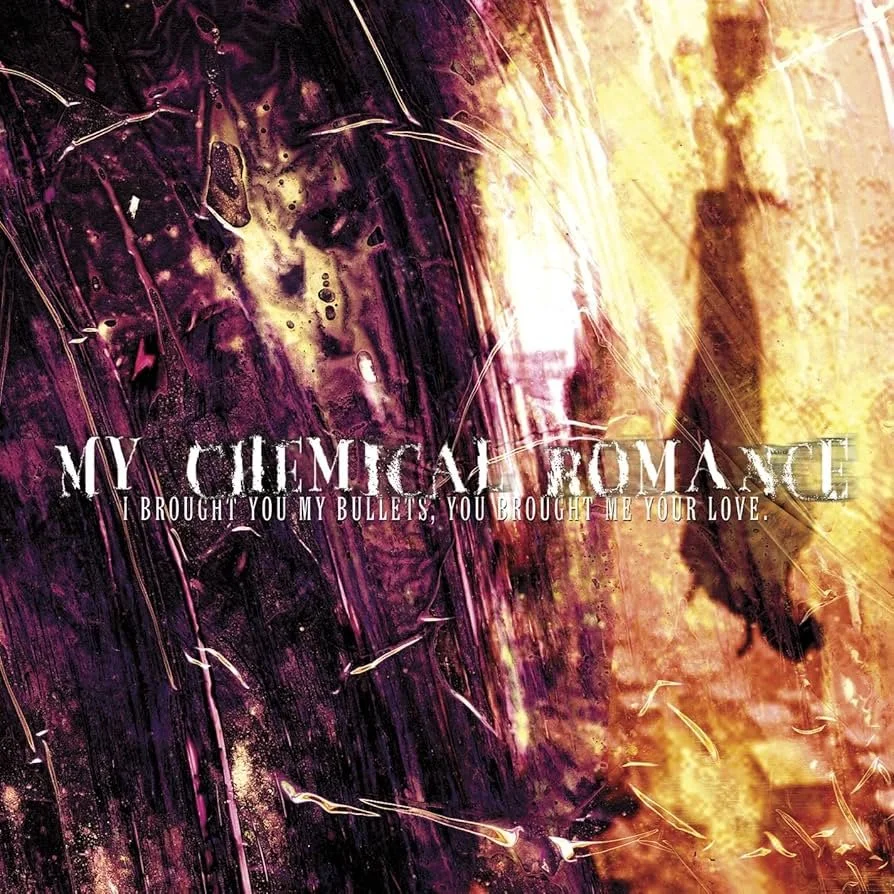
It feels redundant to try and explain the chokehold that My Chemical Romance had over the alternative scene in the early 2000’s. If you were there you certainly knew about it, and even if you weren’t you didn’t need to be. Hailing from New Jersey, My Chemical Romance was Gerard Way’s coping mechanism to the horrors he witnessed of 9/11, and the band’s debut album “I Brought You My Bullets, You Brought Me Your Love” is a direct response.
As is the case with all of My Chemical Romance’s albums, this is somewhat of a concept album, with certain songs spinning the tale of a couple known simply as the ‘Demolition Lovers’. Loosely based on the real life story of Bonnie and Clyde, with some inspiration also taken from one of Gerard Way’s past relationships, the listener is hearing a story unfold of the two lovers on the run until they are eventually caught up with and shot down in the desert.
While later releases from the band fall under the broader 2000s theatre kid emo/pop-punk label, “Bullets” is a raw frenzy that holds true to the roots of emotional hardcore punk rock. The theatrics were still there from the start, they’re just slightly less obvious, buried beneath the relentless intensity of the record.
The album opens with Romance, a rendition of a classical guitar piece played over radio static. Transforming something beautiful and pure, distorting it to make it haunting is a perfect parallel to the story of twisted love that will follow in tracks to come.
The second track Honey, This Mirror Isn’t Big Enough for the Two Of Us then sets the tone sonically for the rest of the album. Ray Toro’s gritty guitars come into play with riffs that make you want to get violent. Gerard Way passionately shouts his bleak lyrics such as “I find it hard to stay with the words you say” with a vocal style you can hear singers taking inspiration from to this day.
The standout tracks are the obvious fan favourites. Our Lady of Sorrows is a short and sweet emo hardcore banger.
Vampires Will Never Hurt You is a slow building anthem about hunting vampires while becoming one yourself. Looming bass and guitars create a sense of tension, perfectly complementing lyrics that plead for someone to "put the stake in my heart”.
Closing the album, Demolition Lovers concludes the first chapter of the story of its titular couple. Like Vampires, it begins slowly before the instrumentation rises with the desperation in the lyrics. Lines like "As snow falls on desert skies Until the end of everything" and "I mean this forever" serve as the protagonist's final declarations of love, as well as Gerard’s own.
While later releases would take the band to greater heights, none of it would have been possible without “Bullets”. Vastly different from the sound that attracted many people to My Chemical Romance, the album remains beloved for the simple fact of setting the stage for one of the greatest emo bands of all time.
BRING ME THE HORIZON - SUICIDE SEASON (2008) [Visible Noise]
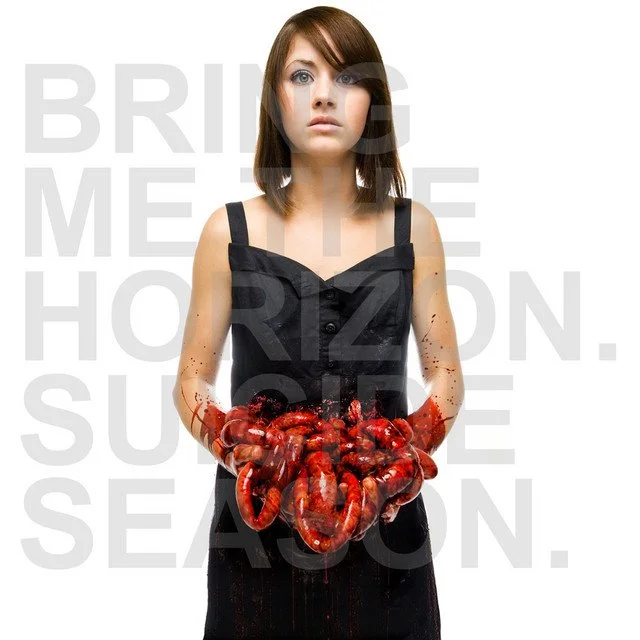
Coming off the back of their monumental breakthrough onto the scene with “Count Your Blessings”, Bring Me The Horizon were on top of the world. With a Best British Newcomer award from Kerrang! Magazine, and opening slots for legendary bands along the likes of Killswitch Engage and Megadeth already underneath their belts, these four ‘scrappy deathcore kids’ had set the bar ridiculously high for themselves with what they could achieve with their sophomore album. The pressure to create a “CYB 2” and keep the momentum going must have been crazy. So what did they do? They made something completely different.
“Suicide Season” says goodbye to sluggish riffs, screeching vocals, and the raw intensity, in favour of a more polished and refined metalcore sound. The guitars hit sharp, Oli Sykes experiments with more vocal styles, and you can hear the band’s first use of electronic elements that would be used more in further releases.
The sound and overall aesthetic of “Suicide Season” is very much a product of the times. Chances are if you had a MySpace page, you would come across someone with Chelsea Smile on their wall. Despite being so immortalised within that specific era of heavy music, the album has aged incredibly well. Sound wise, the production still holds up to today’s standards and the music itself still feels fresh. This album is arguably the best Oli Sykes has ever sounded. His ability to switch from harsh growls to shouted melodies is still unmatched by any later release. The guitars can still sound as heavy as some parts of “Count Your Blessings” with Diamonds Aren’t Forever and Sleep With One Eye Open but they can also take a step back in favour of melody in songs like The Sadness Will Never End and Suicide Season. Despite the edginess of it all, the album is something you can look back on fondly without cringing at how ‘tryhardy’ it is.
“Suicide Season” was also a huge step forward lyrically, with the album having an overarching theme of the grief and despair that comes with losing a loved one. “I look up to the sky, there may be nothing there to see But if I don’t believe in him why would he believe in me?” from Chelsea Smile questions belief of a higher power in the face of tragedy. Who wants to believe that something so devastating is all part of a greater plan? The title track is even more direct: “If only sorrow could a staircase and tears could show the way I would climb my way to heaven to bring him back to you” “Because if you got him back I would get back the friend that I lost too”. A direct message to a close friend of the band, who lost somebody to suicide. It shows how losing someone you love can make you lose apart yourself, the grief makes you distant and lost to those who still care for you.
“Suicide Season” was a crazy bet for Bring Me The Horizon to count on. They could’ve tried to play it safe and copy the sound they were known for. If not for making such a drastic change who knows where Bring Me The Horizon would be now. Would they still be a global phenomenon? Or would they have never made it to the levels that they have. Only two things are certain. Firstly, they took that chance, and secondly, it paid off.
RYAN F
CITIZEN - EVERYBODY IS GOING TO HEAVEN (2015) [Run For Cover Records]
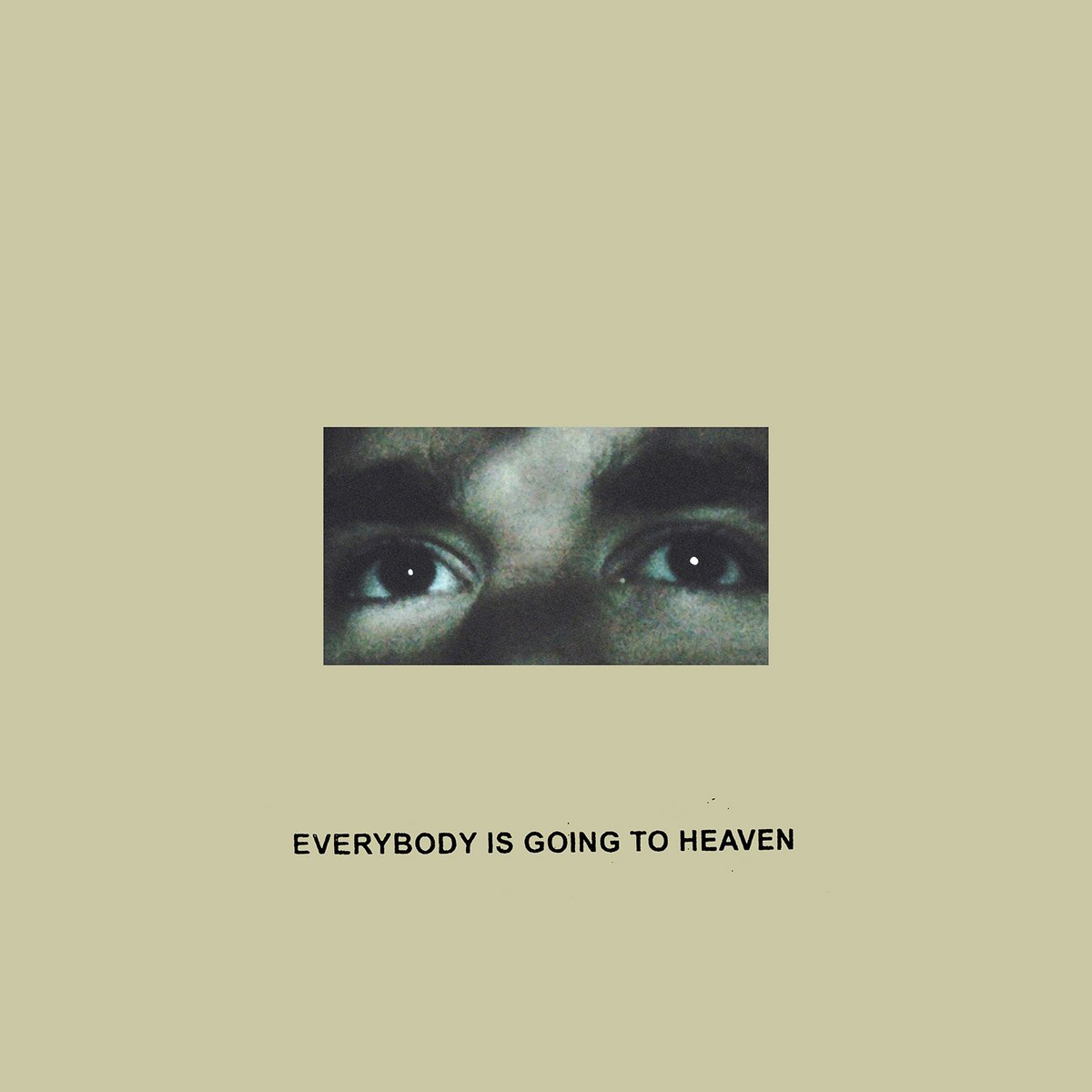
A lot of bands use their sophomore album to try to recreate the lightning-in-a-bottle magic of their debut. Citizen took the expectations surrounding what comes after Youth. A new phase of Emo revival was kicking off in 2015, with its wistful, clean guitars and an added heartbreak package bundled for everyone's Tumblr dashboards, but Citizen had something else to give.
“Everybody Is Going to Heaven” is alienated from their past sound. A hostile record with a refusal to comfort you. Emotional, hook-driven post-hardcore that smashes the foundations Citizen left for themselves. Anxiety-riddled, feedback-laced, and suffocating ambience. The riffs grind through rusted-over guitars, with each hit on the drums landing like an anvil. Nick Hamm is who should be praised for not chasing flashy guitar techniques and rather etching out the lumps and bumps texture through “Everybody Is Going to Heaven”.
Mat Kerekes pushes himself to a never-before-seen level of desperation throughout his vocals, often exhausted rather than emotional. Lots of vocalists within this style can shout and scream all they want about pain and misery. Mat sounds as if he has calloused over and gone numb. Each line and melody is buried in shards of glass; as you dig deeper, it's only pain.
A standout song from “Everybody Is Going to Heaven” is stain. This song captures a very specific emotion of carrying something around for too long. The bitterness and sadness throughout linger, repeat, and erupt. Tension is instilled with the constant guitar plucks, with Mat breaking through with aggression and pure vulnerability. The quiet moments are always threatened with emotional urgency.
Another standout is Yellowlove, a gripping capture of an emotional memory. The magic about this yellowlove is the feeling of warmth it brings to its listeners. With “Everybody Is Going to Heaven” being such an ugly record, this song is some blissful sadness to the ears to keep the listening experience fresh for a quick break. On first listen, you hear the melody. The next time, you catch the depth and detail. Eventually you are not just listening to the song, you're living inside the world Citizen paints. It's a perfectly crafted song, turning personal pain into something for others to dive into.
“Everybody Is Going to Heaven” is the sound of Citizen at its rawest form. The use of human frustration and turning it into something cathartic and ugly. Whilst this album isn't the easiest listen, it's exactly what it was intended to be. It eases its itensity through the songwriting honesty, walls of sound that don't feel like music, and a breakdown captured and strung out through a series of songs. Citizen made an album that is a true expression of pain.
LOGIC - UNDER PRESSURE (2014) [Def Jam Recordings]

After years of mixtapes with technical rapping and boom-bap influence, Logic steps up to the challenge of his debut album. “Under Pressure” is the outcome; it's ambitious, emotionally honest, and full of influences and nods to what drives Logic to stand side by side with his heroes.
The greatest strength of “Under Pressure” is its production from No I.D.Soulful jazzy samples, warm basslines, and cinematic transitions flow through this record from start to finish. Tracks such as Soul Food and Under Pressure feature memorable sample flips behind Logic's technical lyricism, punchlines, and storytelling, all told through his signature rapid-fire flows paints a picture of growing up in Gaithersburg, Maryland.
Lyrically, Logic is a weird one; his ability to wear his heart on his sleeve and be emotionally vulnerable about his abandonment and family issues brings some of the best bars spoken through a microphone. The issue with Logic during this record is the repetitive reference to rappers from the past. It is a torn record between a showcase of lyrical athleticism, minutes of pure bars seemingly all under the same breath about nothing much compared to the heartfelt tracks narrating his family on addiction, poverty, and identity.
Growing Pains 3 is a true masterpiece of storytelling. Personally fueled flows about his tough childhood in an impoverished area and his brutally honest road to find success. A harsh look back on him as a young kid struggling with abandonment, social services ripping him from his family, and stating his true enemy growing up being drugs, alcohol, violence, and bad influences.
Another standout track is Gang Related. The song is built around a dark cinematic vocal sample flip to set the atmosphere and add tension for Logic to paint the trauma, gang violence, and destructive environment that keeps people stuck in a cycle. There is no glorifying the world he pictures through his words; it's put under the microscope and shows the fear and desperation the environment brings to a young Logic. The perspectives of narration are switched between himself and his older brother, who was running about the streets surrounding his life with gang violence. Logic's flows seem effortless to him; razor-sharp delivery through changing rhythm patterns showing off his technical skill as a rapper is the main event here, with the lyricism being buried for his fans to dig out and read. A Focused, dramatic track exploring the deep trauma of what he witnessed as a young kid and his own brother doing what it takes to protect himself in West Deer Park.
The pure hunger to be the greatest overshines any of the shortcomings and diversions throughout “Under Pressure”. This is truly an aim-high rather than play-it-safe album. A showcase of this young rapper's talent with one of the best beat selections an album has ever seen.
CHRIS
TROPHY SCARS - HOLY VACANTS (2014) [Monotreme Records]
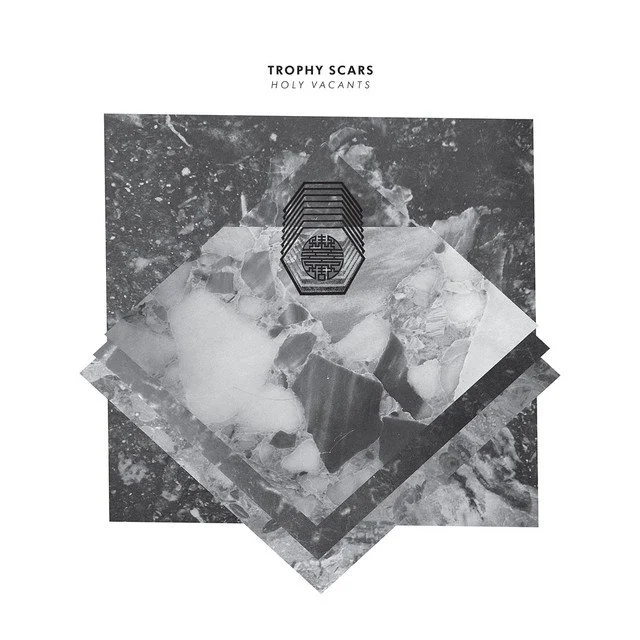
A band who've dedicated their career to exploring the depths and reaches of the post hardcore genre, Trophy Scars creative pinnacle came in 2014 with the release of the concept album, “Holy Vacants.” A record about two lovers, who discover not only that the secret to growing old is drinking the blood of angels, but also how to create Qeres, a perfume that, when created, can kill said angels and Nephilites (Half angel and humans) to get the blood, it's a unique prospect on paper and like most of Trophy Scars work, born out of vocalist and main songwriter Jerry Jone's dealing with a doomed relationship. It isn't the bands first foray into creating a narrative through songs though, their album before this "Bad Dreams" featured the trilogy of 'Geneva', 'Toronto' and 'Nola' which are a fun journey themselves. Taking the form of a doomed, almost Bonnie and Clyde romance tale and how desire can corrupt, it's 12 tracks take influence from jazz, indie and the aforementioned post hardcore, to name a few. From the slow, lustful opener of Extant to the almost psychedelic Archangel, the journey it takes you on is like few others.
The story itself isn't cryptic or buried in metaphor either, as Jerry Jones lyrics (Often endearingly ham-fisted) are descriptive and vibrant throughout. One particular highlight comes in the form of Adam Fisher's (Fear Before The March Of The Flames) deranged guest vocals on Chicago Typewriter who's delivery on lines like "I move through the rooms like a haemorrhaged balloon'“ is as graphic as it is absurd. While Trophy Scars have never been a band who've been afraid to take risks, “Holy Vacants,” with it's scale and scope remains a monolith for the band, a creative peak that in this authors opinion, they never reached before or since. The variation in the songs, the recurring motifs and the odd melodies that often seem forced out of Jerry Jones throat all come together in strange yet satisfying ways. The world created is dark by design, when you consider the depths of depravity sunk to by the protagonists to even consider harvesting ichor from Angels, especially when you consider that for them to even exist, God does too. This fact is addressed in Every City, Vacant, where it's asked "I wonder if God wrote A book about us, could he actually forgive?". Not to spoil the journey the album takes the listener on, it delves into what are seemingly the stages of grief as one of the protagonists battles with the other in terms of how they want to live their life and the measures they'll take to get their way. It's uncomfortable at points and perhaps a little too on the nose, but imperfections are what make things truly perfect and unique. This is truly a record that sounds like no other, from a band who's discography is one of the most satisfying, deep and yet criminally underrated in all of post hardcore.
BLEEDING THROUGH - DECLARATION (2008) [Trustkill Records]
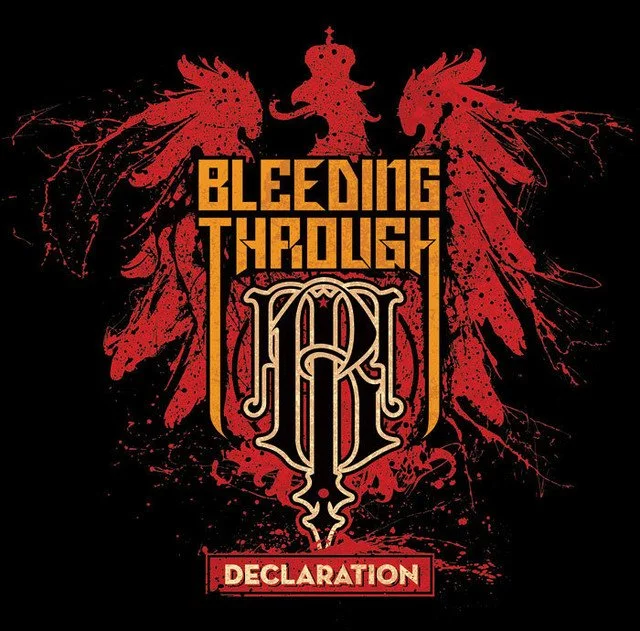
Four albums into a career that helped define the early 00's metalcore sound, Bleeding Through somehow delivered their angriest, most creative and most coherent album on their fifth release. Their previous works were all subjective classics and while most do gravitate to “This Is Love...This Is Murderous “ when planting a flag in their favourite album, it comes in a very close second to “Declaration”. While “This Is Love…” and previous effort 'The Truth' had a lyrical focus that was pointed towards broken hearts, lost love and anger in relationships, 'Declaration' was more focused on issues the band had with touring, their record label at the time (Trustkill) and feelings regarding the metalcore scene in general at the time. It’s certainly a lot more hate-filled and pissed off than their contemporaries in bands like Killswitch Engage were putting out at the time. That's not to say that matters of the heart don't get aired out here, as one of the standout lines of the album on 'Germany' laments ‘I once gave my heart for black hair, pale skin and broken english’.
Opting for an epic, orchestral intro track Finnis Fatalis Spei (Which translates to The Fatal End Of Hope) to lull you in, Declaration (You Can't Destroy What You Can Not Replace) blasts the album into life with scathing blast beats and some of Brandan Schiepattis most visercal vocal moments to date, alongside one of the band's heaviest moments of their career in the tracks final breakdown. It's hard to describe how utterly pissed he sounds on every syllable, shrieking and growling utterances of pure disgust and vitriol, such as "You're Just a trend, a lamb in sheeps clothing, time to strike the nerve and erase" on the aforementioned Declaration. The opening of Orange County Blonde And Blue is Brandan at his bug eyed, vein popping best, with ‘Name one thing you've ever fucking had to give your goddamn life for’ being one of his most antagonistic lines of his and it truly encapsulates the level of vitriol that seeps through this record.
That isn't to say the album is entirely focused on heaviness though. There's plenty of moments of melody, where Brandan forces his voice into melodies that shouldn't really work but do. He doesn't have the best of clean vocals, but you can't fault the honesty and catharsis that pours out him during those moments, particularly on There was a Flood's phenomenal chorus where at times he channels Mike Patton for inflection and melody. Album closer Sister Charlatan (Not counting Self Defeating Anthem which is a bonus track) is a phenomenal way to end the record, with keyboardist Marta Demmel (Neè Peterson) at her most magnificent, creating a vampiric, gothic atmosphere unlike anything she'd done before.
Amongst a catalogue that has more highs than lows, Declaration stands out on top, but only slightly. It's the refinements, the extra spark, the flourishes that take it above This Is Love... in the rankings. That may be a take that will spark cries or "SACRILEGE!" in certain corners of the internet but deep down, they know that Bleeding Through perfected their sound on Declaration and it remains one of the best metalcore albums of the decade.
SAM
STATIC DRESS - ROGUE CARPET DISASTER (2022) [Roadrunner Records]
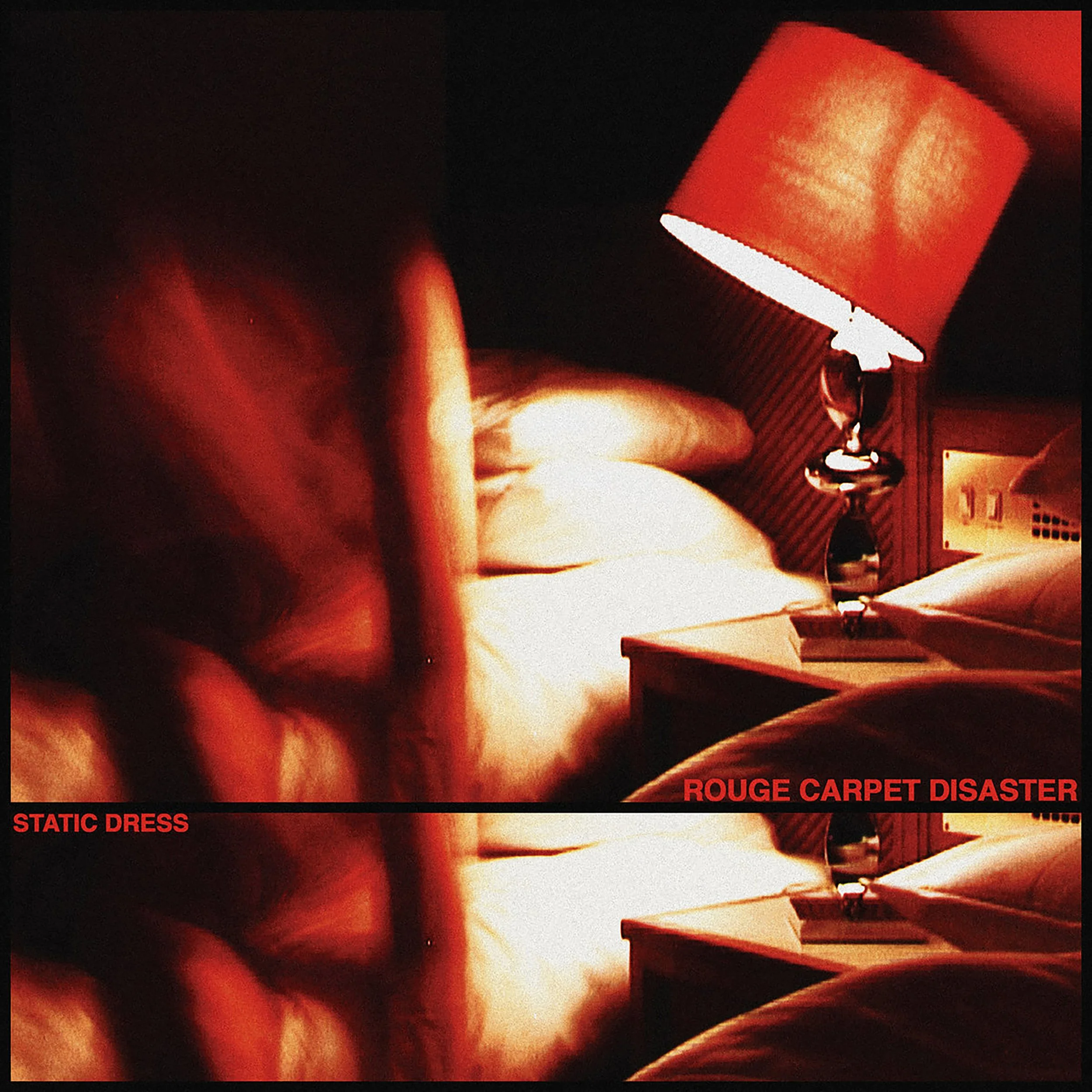
Static Dress first popped up in the scene in 2019 with debut single clean., with unique visuals and raw, human production, harkening back to an era free from digital drums and midi-amp one-zero-zero-zero riffs. A breath of fresh air in the modern era of sterilized, pristine metal built for radio, the band would expand further with more singles, and an EP, titled “Prologue… (Comic Book Soundtrack)”, setting up an ever-evolving universe between videos, music, and multimedia before releasing their long-awaited debut LP in 2022.
It’s hard to overstate how incredible “Rouge Carpet Disaster” is. As a release, it’s amazing. As a debut release, however, it is otherworldly. “Rouge Carpet Disaster” cemented Static Dress as a force within the heavy music scene. Continuing the story established in their EP in both lore and sound, opener fleahouse kicks the album off with a bang, as vocalist Olli Appleyard unleashes a bloodcurdling scream before stepping back into soft melodic cleans. “Rouge Carpet Disaster” further chronicles the ill-fated romance of Emile and Nancy, a couple first introduced in the band’s EP. Whereas the EP was from the perspective of Nancy, “Rouge Carpet Disaster” is all Emile, as in the album’s first few moments, it’s likely that Emile has killed her.
One of the strengths of “Rouge Carpet Disaster”, and the larger Static Dress body of work, is the ability to meld storytelling into relatability. Nobody that listens to Static Dress is going to murder their partner and a caretaker in a motel and then slip into a hallucinogenic psychosis, slowly unraveling as they come to the realization that they’re being experimented on (I hope), and yet “Rouge Carpet Disaster” remains an album that cuts like a knife with poignant lyrics scattered throughout it’s mind-bending story. From fleahouse’s pained “Did you really need me?” to the sorrowful reflection of such.a.shame’s “I think that I moved on too soon”, to, hell, the entirety of Marisol, “Rouge Carpet Disaster” peels back the layers of an incredibly dramatic story until only the emotion remains. It’s an album that, despite it’s spectacle, is highly emotional.
Whether it’s the smooth melody of the anthemic such.a.shame or the blistering fry screams of Courtney, just relax (a nod to the game L.A. Noire if memory serves correctly), Static Dress refuses to take their feet off the gas, and when the instrumental loses intensity, the lyrics pick up the slack, ensuring that even in the album’s quietest moments, “Rouge Carpet Disaster” packs a punch. The only thing that matches the heaviness of the instrumentation is the words woven by Appleyard. Yet another of the album’s many strengths is its variance, something they would further expand on in their sophomore release, “Injury Episode”. One of the album’s lightest moments, the weary coos of Attempt 8 is swiftly followed up with the explosive screams of the previously mentioned Courtney, just relax, the heaviest on the album. And yet through it all, it doesn’t feel jarring, it doesn’t feel forced, it just works. There’s an air of control to the chaos that keeps it all feeling unified.
From the first listen, “Rouge Carpet Disaster” had me enraptured, I lost hours and hours repeating the album for almost a month straight when I first heard it. “Rouge Carpet Disaster” came to me when I needed it the most, and I found solace in its 12 tracks. It sure as hell made me a fan of Static Dress. I haven’t gravitated towards a band in both sound and aesthetic like this since I was four, when I heard “Hybrid Theory” for the first time.
LINKIN PARK - HYBRID THEORY (2000) [Warner Records]
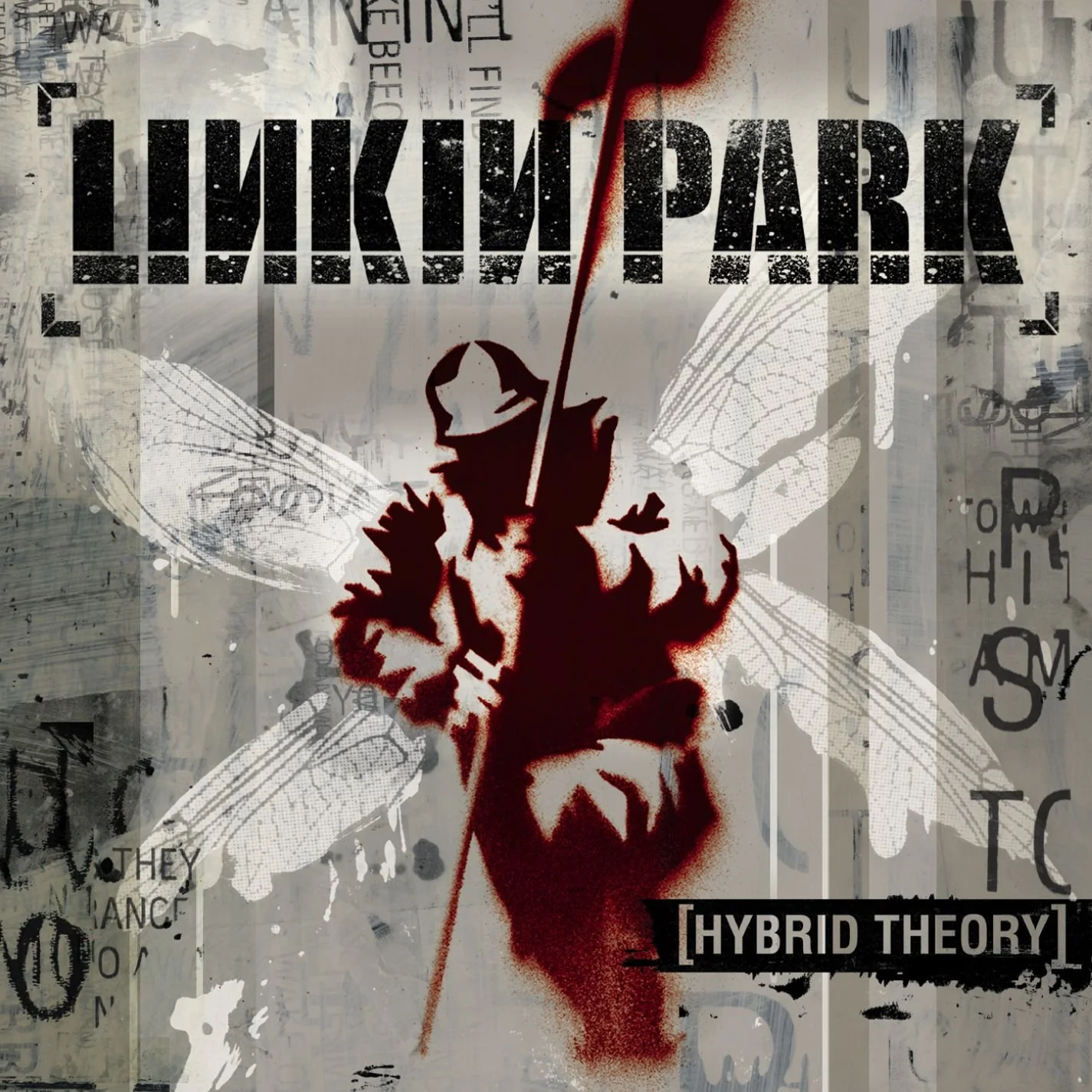
It’s hard to say where I’d be without Linkin Park’s debut, “Hybrid Theory”. To say the album is important to me would be the understatement of an eon. It’s been my favorite album since I was four. I remember sitting in my dad’s car on the way home from tee-ball practice, listening to the album front to back on my mom’s copy of the CD, a copy of which I still have, albeit shattered from cross-country relocation after cross-country relocation. From the moment the intro kicked in, I was hooked. “Hybrid Theory” got me into nu metal, and more importantly, it got me into music in general. Fast forward almost 17 years later, and I work for four publications, two of them based entirely around nu metal, and I wouldn’t be working for any of them had my father not spun that record.
It’s also hard to say where music would be without “Hybrid Theory”. Fuck denoting years with C.E. and B.C.E., in this house we use H.T. and B.H.T. (Hybrid Theory and Before Hybrid Theory). Nu metal was already on the way out in 2000, when the album released, due to varying factors of oversaturation and the existence of a post-Woodstock ‘99 world, and many thought the genre was waning down until “Hybrid Theory” came out, and with it came a renaissance, if you will. Their sound was unlike anything ever put to a disc. Sure, they had their influences, ranging anywhere from Anthrax and Public Enemy to Refused, but the way the band executed their sound was wholly unoriginal. There’s a reason Linkin Park burst out of the nu metal sphere and into the pop culture zeitgeist. Born from the ashes of Grey Daze and Xero, Linkin Park stood tall, releasing “Hybrid Theory” to near universal acclaim, and for good reason. Not only is it, in my opinion, the best debut of all time, but it’s the best album ever written.
“Hybrid Theory” may be over 25 years old, but it hasn’t aged a day. From the first few seconds of opener Papercut, the listener is thrown headfirst into the band’s signature symphony of atmospheric turntables, gnarly riffs, and lyrical barrage from singer Chester Bennington and emcee Mike Shinoda. Throughout the album, the two vocalists go back and forth, which on paper should end up with Shinoda playing second fiddle to Bennington, widely regarded as one of the best, if not the best metal vocalist of all time, but is executed in such a fashion where the two alternate a one-two punch of vocals, matching each other's energy perfectly. If you’re reading this, you’ve most likely heard this album already. You don’t need me to explain the sound of it, you already know it. I won’t waste your time telling you what you hopefully know all too well. However, I implore you to relisten to “Hybrid Theory”. There’s a reason tracks like In the End, and Crawling, and the rest have persisted through the years, remaining in the spotlight. Those hooks still hit 25 years later, and listening to it hits just as hard as it did when I was a child, when I first had my eyes opened to the world of music. I’m 20 now. I’ll still be bumping this shit when I’m 80. Count on it.
RYAN S
SYLOSIS - CONCLUSION OF AN AGE (2006) [Nuclear Blast Records]
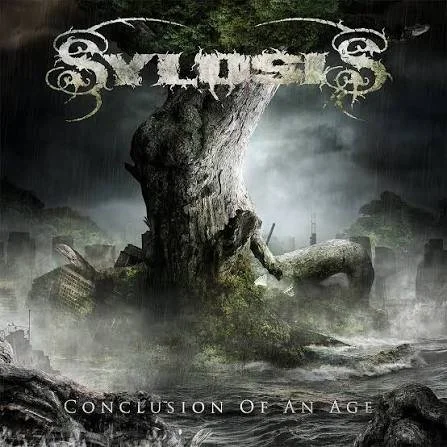
Some albums get remembered because they were important for their time, others get remembered because they still sound ridiculous years later. This record is both. Honestly, if it dropped in 2026 instead of 2006, people would absolutely lose their minds over it. This shit would be out on DAZE and their merch would be selling for £90 on Vinted.
It has literally everything you could want from a metalcore album. 5-7-8 metalcore riffs? Check. Absurd technical guitar work? Check. Insane guitar melodies with clean vocals? Check. Huge massive baggy jeans, studded belts and XS t-shirt breakdowns? Check.
Twelve tracks, not a single skip. That sounds insane until you actually deep it and listen to it front to back. Every song deserves it’s place and every single track brings something memorable to the table. The album never loses momentum, doesn't have that mid-album slump that so many modern metalcore records suffer badly from and keeps finding new ways to stay exciting while sticking to its core sound. The guitar work deserves a lot of the praise. The riffs are endless and somehow every single one feels bigger than the last. There are technical passages all over the album, but they never come across as the band showing off for the sake of it. Everything serves the songs. The solos are packed with melody, the harmonised leads are huge, and even the most complex sections still hit with real impact. It's the kind of album that guitar nerds can spend years obsessing over while enjoying getting flattened by the sheer volume of riffs.
From the first listen of Swallow the World in my friend's bedroom listening to Kerrang sampler albums as a kid was its atmosphere and concept. The underlying theme revolves around the collapse of human civilisation and the Earth gradually reclaiming itself once humanity is gone. Twenty years later, that idea feels even more relevant than it did when the album first came out and a message the band still push 20 years later. The band fully commits to the concept, creating something that feels less like a collection of songs and more like a soundtrack to the end of the world. From the opening acoustic guitar and sounds of wind to the ambient guitar solo that closes the final track, the whole thing feels cinematic in the best possible way.
A huge reason the album works so well is Jamie Graham's vocal performance. As his final release with the band before moving on, it's an incredible way to sign off. His harsh vocals bring all the aggression you'd expect, but it's the clean vocals that really elevate the record. They cut through the wall of guitars perfectly and add an emotional edge that gives the album even more depth. The contrast between the heaviness and melody feels effortless throughout.
Picking a favourite track is nearly impossible because every song could make a case for being the best on the album. If there's one track to start with, though, it's Last Remaining Light. It captures everything that makes the record something I come back to at least once per month minimum. Huge atmosphere, massive riffs, soaring melodies and one of the most memorable guitar solos on the entire album. This is one of those rare metalcore albums where every piece falls perfectly into place. It's ambitious without being pretentious, technical without being exhausting, and heavy without forgetting how to be fun. Twenty years later, it still sounds fresh, still sounds huge, and still feels like a standard that a lot of modern metalcore bands are chasing.
CANDLEMASS - NIGHTFALL (1987) [Axis Records]
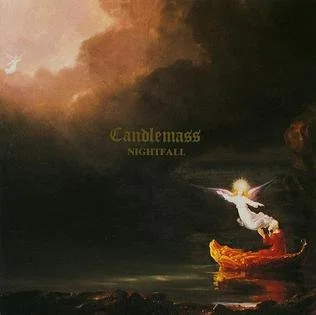
You ever listen to an album and think to yourself, “wow, what the fuck have I just listened to?” and then immediately put it on again? That was my first exposure to Candlemass and “Nightfall.” I remember seeing the CD on my dad's music shelf when I was younger and assuming it was some kind of classical record. Looking back, I wasn't entirely wrong. If “Nightfall” was a piece of art, it would be hanging in The Louvre under armed security 25 hours a day, 8 days a week.
“Nightfall” is a one-hour descent into death, grief, religion, the occult and existential dread. It is also one of the most divisive albums you'll ever encounter in metal. Candlemass are the definition of a love-or-hate band. Some people hear Messiah Marcolin's vocals and immediately understand the appeal. Others never get past them. There is very little middle ground. Regardless of where you stand, Candlemass are one of the most important bands in the history of doom metal, and “Nightfall” remains one of the genre's defining statements nearly four decades after its release.
The album opens and closes with enormous, theatrical soundscapes that make you feel as though you're standing at the gates of hell itself. Everything about “Nightfall” feels larger than life. The riffs are slow, crushing and deceptively memorable, while the lead guitar work adds a sense of grandeur that elevates every song beyond simple doom metal. Every track carries its own emotional weight and identity. Whether it's a riff, a vocal melody or a guitar harmony, there is always some small detail that pulls you back for another listen.
Much of the album's enduring appeal comes from its ability to balance heaviness with melody. The songwriting never feels repetitive despite the slower tempos, and the band's understanding of dynamics keeps the record engaging from beginning to end. Countless doom, sludge and traditional metal bands have borrowed from the blueprint established here, and it's difficult to listen to “Nightfall” without hearing the foundations of entire subgenres taking shape.
Then there's Messiah Marcolin. His operatic falsetto is arguably the album's defining feature and the reason so many listeners either adore or reject Candlemass. For me, his voice is the perfect counterpart to the bleak lyrical themes. His dramatic delivery transforms songs that could have been merely heavy into something genuinely epic. Before listening to the album, I strongly recommend Googling Messiah Marcolin. He looks exactly like the person you'd imagine fronting a doom metal band that sings about medieval imagery, religion and Satan.
My personal highlight will always be At the Gallows End. I genuinely struggle to explain why it resonates with me as much as it does. The opening solo, the repetitive verse riff, the melodic lead work and the almost theatrical vocal performance all come together perfectly. Every element feels essential. It's one of those songs that somehow gets better every time you hear it, no matter how many times you've already played it.
“Nightfall” isn't just one of the greatest doom metal albums ever released. It's one of the most distinctive and influential records metal has ever produced.
KEL9
PIXIES - DOOLITTLE (1989) [4AD]
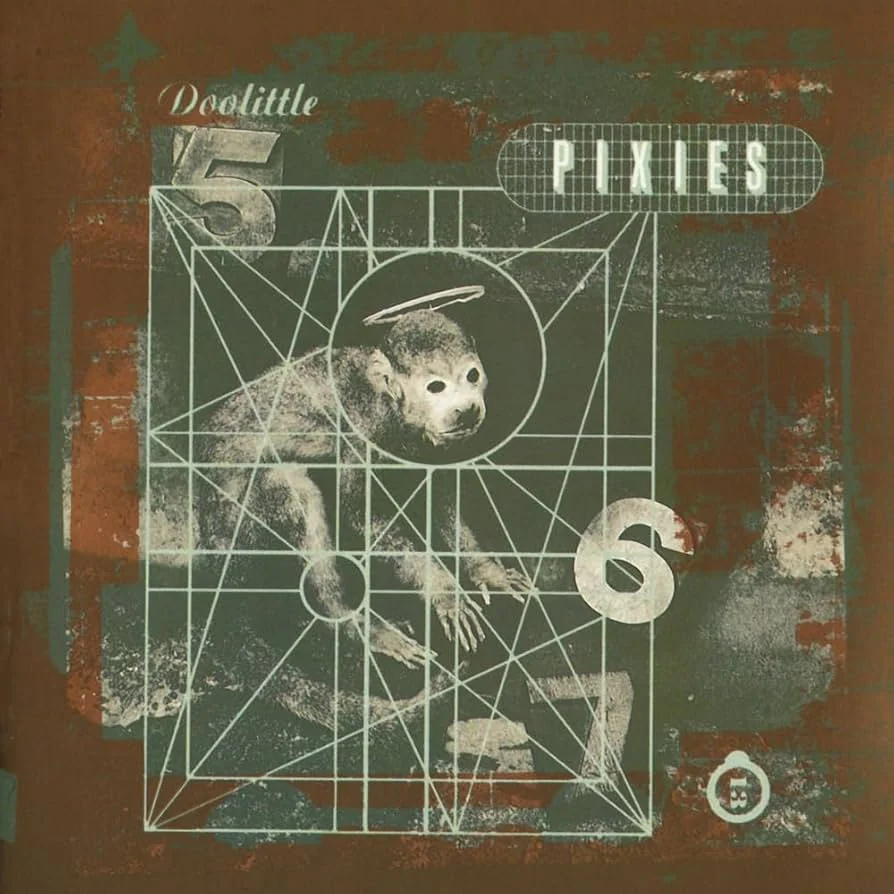
There is a particular species of record that sounds like it belongs nowhere, and “Doolittle” is one of the finest specimens ever committed to tape. It arrived a full two years before alternative curdled into a marketing category, and it owes allegiance to none of the usual camps. Punk's distortion is there. So is a pop songwriter's ear for melody, along with a sense of humour so dry it borders on cruelty. Rather than splitting the difference between hardcore aggression and radio-friendly hooks, Pixies built something that thrives on the friction between the two and never bothers to resolve it.
Take the opening seconds of Debaser. Joey Santiago's guitar isn't interested in riffs so much as controlled demolition, jagged little detonations, awkward silences, and a sense of rhythm that seems to trip over itself on purpose. Then comes that infamous shriek about slicing up eyeballs, a nod to Buñuel and Dalí's Un Chien Andalou. Suddenly the whole song clicks into focus as a kind of thesis statement for Black Francis's writing grotesque imagery delivered with the cheerful indifference of a nursery rhyme. It's gruesome and it's fun, often within the same breath, which is precisely the trick.
Much of the album's power comes down to what it withholds. The quiet-loud dynamic that every alt-rock band would later borrow wasn't, for Pixies, a mere structural gimmick; it functioned more like a nervous system. On Tame and Gouge Away, the band lets tension coil for just slightly too long, so that when it finally snaps, the release feels less like a chorus kicking in and more like the song itself losing its grip. The drums stay flat and unfussy, clearing space for Santiago's guitar to do something genuinely strange and for Francis's vocals to lunge without warning.
Some credit belongs to producer Gil Norton, who was handed the unenviable task of sanding down the feral edges of Surfer Rosa without sacrificing what made it feral in the first place. By most accounts the sessions weren't easy, Norton pushed for precision, Francis worked on instinct, and the resulting tug-of-war is audible in the finished record. It sounds deliberate without ever sounding safe, as though the band were fighting the urge to overthink every bar and mostly winning.
And then there's Kim Deal, whose voice does something none of the men in this band could manage alone. On Silver and I Bleed, her harmonies drop the temperature by several degrees, carving out small pockets of calm inside songs that otherwise refuse to sit still. It's a contrast that would go on to shape a whole generation of guitar bands, with Nirvana being the most obvious example, though none of Pixies' disciples ever quite matched the specific, off-kilter surrealism of the source material.
Lyrically the record never plays it straight either. Monkey Gone to Heaven smuggles environmental dread and half-formed religious anxiety into what is, structurally, one of the catchiest things the band ever wrote, that odd little countdown, the offhand mention of “the creature in the sky.” Somehow the song stays cryptic and hummable at once, which is a harder trick than it sounds.
Nothing on “Doolittle” is quite right, and that's the whole point. The guitars cut at strange angles, the lyrics don't behave, the songs rarely go where you expect, and yet none of it feels arbitrary. It's a record that clearly understands pop music inside and out, then spends thirty-eight minutes gleefully breaking its rules.
“Doolittle” didn't sound like the future because it was trying to predict one. It sounded like the future because, thirty-five years on, nobody's quite worked out how something this odd manages to feel so effortless.
ALCEST - SPIRITUAL INSTINCT (2019) [Nuclear Blast Records]
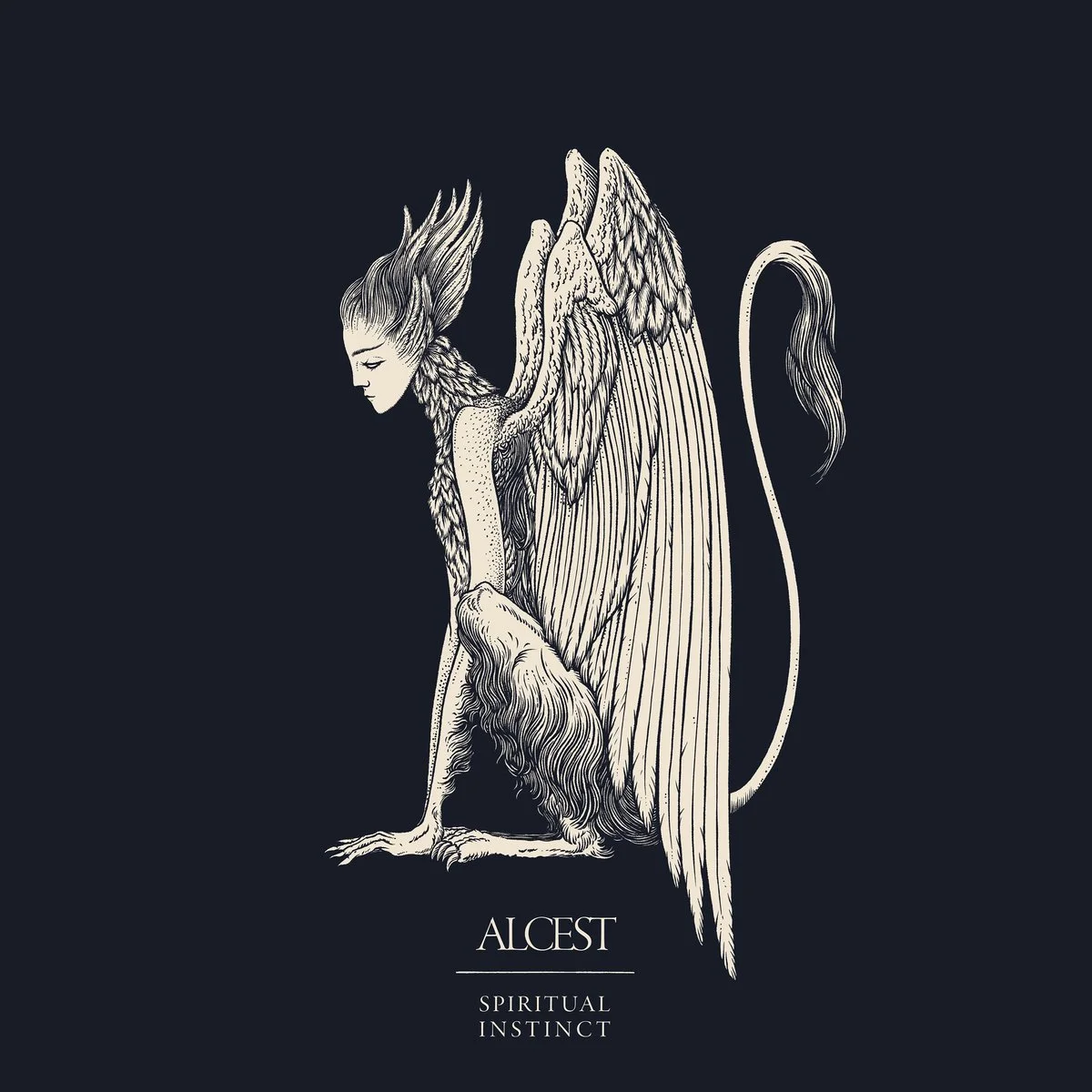
There's a particular ache running through Alcest's music that has never quite belonged to nostalgia, nor to fantasy, but to something closer to the memory of a place that may never have existed at all. From the project's earliest days, Neige has built his sound around an unreachable elsewhere, somewhere felt more than located, a sensation rather than a set of coordinates. On “Spiritual Instinct”, that inner landscape stops being purely dreamlike and starts pushing back. The light hasn't vanished, but it is no longer untouched. It now has to survive pressure, fear, uncertainty, and the sheer weight of being real.
Coming after the introspective haze of “Kodama”, this record reveals a heavier, more physical side of Alcest without ever discarding the emotional vocabulary that has always defined the band. The guitars carry more mass, the drums land harder, and the black metal roots are allowed to surface more openly than before. Yet the aggression is never there for its own sake. It exists in contrast, and that contrast is what gives the fragile melodies their weight, like something delicate trying to stay alive inside a hostile climate.
Les Jardins de Minuit opens the record by establishing that tension almost immediately, like a familiar dream that has quietly changed shape without warning. Layered guitars stretch outward, suggesting distance and motion at once, while Neige's voice hovers somewhere between human and something harder to name. It feels less like a vocal performance than a memory being translated, imperfectly, into sound. That has always been Alcest's central gesture. The voice isn't just carrying words; it is reaching for something language was never built to hold.
That idea matters especially when it comes to Neige's lyrics. He doesn't use fantasy as an escape hatch so much as a language for emotional states that plain speech cannot quite reach. Isolation, protection, inner conflict, the search for meaning, these threads run throughout “Spiritual Instinct”, and the album's title captures the duality at its core. Spirituality here isn't offered as comfort alone. It is an instinct, something closer to a fight against the darker corners of existence than a retreat from them.
The production strikes a careful balance between density and clarity. The harsher passages hit with a physical force Alcest has rarely allowed itself before, particularly on Protection, where wave after wave of distortion builds into something that feels almost like resistance against an invisible force. The title turns faintly ironic in that context, as the very thing meant to shelter you is also surrounded by danger.
One of the most striking things about “Spiritual Instinct” is how it conjures synesthetic imagery without ever spelling it out. Alcest's music has always felt tied to colour, to landscape, to places that couldn't exist. A melody can feel like somewhere half-remembered. A chord change can conjure a memory that doesn't belong to this life at all. That's the band's real gift, making the abstract feel oddly, almost uncomfortably familiar.
The closing track, L'Île des Morts, brings that balance between darkness and transcendence to its fullest expression. Named after Arnold Böcklin's famous painting, the song doesn't treat death as an endpoint but as another kind of passage, mysterious rather than final. Its sprawling closing minutes feel less like a conclusion than a slow dissolve into the unknown, leaving the listener caught somewhere between exhaustion and something close to peace.
“Spiritual Instinct” isn't Alcest returning to its roots, and it isn't simply a heavier record either. It is an album about the distance between the world as it exists and the world as it is felt. Rather than escaping the darkness, the band leans into it, using it as the backdrop that makes even the smallest flicker of light feel worth everything it costs.
This is Alcest at its most grounded and, somehow, at its most otherworldly. Proof that after years spent chasing another realm, it was always in the shadows that the most luminous discoveries lay waiting.